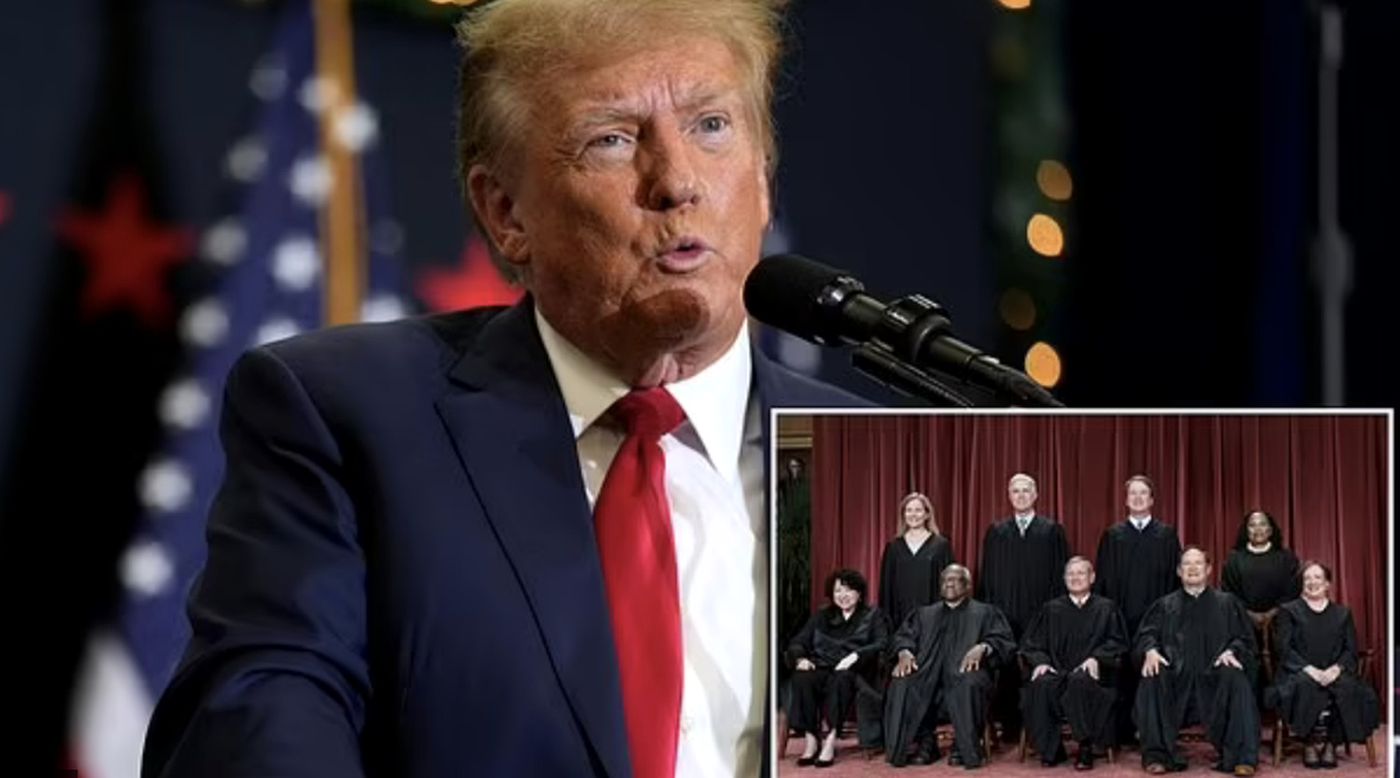
The U.S. Supreme Court declined Tuesday to let President Donald Trump immediately remove the nation’s top copyright official, leaving Shira Perlmutter in her position.
At the same time, the legal battle over her dismissal continues. In an unsigned order, the justices denied the Justice Department’s request to lift a lower court ruling that temporarily blocked Trump’s effort to remove Perlmutter as Register of Copyrights and director of the U. S. Copyright Office. The Court emphasized that its decision was procedural and did not address the underlying legal dispute over whether Trump has the authority to remove the official. Perlmutter was informed in May 2025 that the Trump administration had fired her. As Register of Copyrights, Perlmutter serves as Congress’ chief adviser on copyright law and oversees the U. S. Copyright Office, which operates under the Library of Congress. Her dismissal came one day after the Copyright Office circulated a report concluding that some unauthorized uses of copyrighted material by technology companies to train generative artificial intelligence systems could violate copyright law. Perlmutter’s attorneys have argued that Trump removed her because he disagreed with the report’s conclusions regarding artificial intelligence.
The Trump administration has not accepted that characterization and instead argues the president acted within his constitutional authority. Later that same month, Trump also dismissed Librarian of Congress, Carla Hayden. He then designated Todd Blanche, his former criminal defense attorney and current acting U. S. attorney general, to serve as acting Librarian of Congress. In that role, Blanche purported to ratify Trump’s decision to remove Perlmutter.
Perlmutter responded by filing suit, arguing that Trump lacked the authority to appoint Blanche because the Library of Congress is part of the legislative branch rather than the executive branch. She further contends that because the Copyright Office operates within the legislative branch, the president lacks statutory authority to remove its chief. The Constitution divides federal power among the executive, legislative, and judicial branches, making the dispute a significant separation-of-powers case. A federal district judge initially declined to restore Perlmutter to her position, ruling that she had not demonstrated the type of irreparable harm required for a preliminary injunction.
However, the U. S. Court of Appeals for the District of Columbia Circuit later reversed that decision. In a divided ruling, the appeals court reinstated Perlmutter while the litigation proceeds. Writing for the majority, Judge Florence Pan concluded Trump’s action represented “an attempt to reach into the legislative branch to fire an official that he has no statutory authority to either appoint or remove.” Pan compared the situation to a president attempting to dismiss a federal judge’s law clerk. “The president’s purported removal of the legislative branch’s chief adviser on copyright matters, based on the advice that she provided to Congress, is akin to the president trying to fire a federal judge’s law clerk,” Pan wrote.
Judge J. Michelle Childs joined the majority opinion. The Trump administration appealed that ruling to the Supreme Court. Justice Department attorneys argued that federal law authorized Blanche’s appointment as acting Librarian of Congress and that Article II of the Constitution gives the president authority to remove Perlmutter because, in the administration’s view, the Copyright Office exercises executive power. The Supreme Court previously delayed acting on the administration’s request while it considered two other disputes involving Trump’s authority to remove federal officials.
On Monday, the Court allowed Trump to remove Federal Trade Commission Commissioner Rebecca Slaughter but refused to let him dismiss Federal Reserve Governor Lisa Cook. Tuesday’s order leaves Perlmutter in office for now while the broader legal challenge continues through the lower courts, Reuters reported. The justices did not explain their reasoning, and because the order does not address the merits of the case, the Supreme Court could ultimately reach a different conclusion if it agrees to hear the dispute in full.
SCOTUS Refuses To Let Trump Remove Copyright Chief