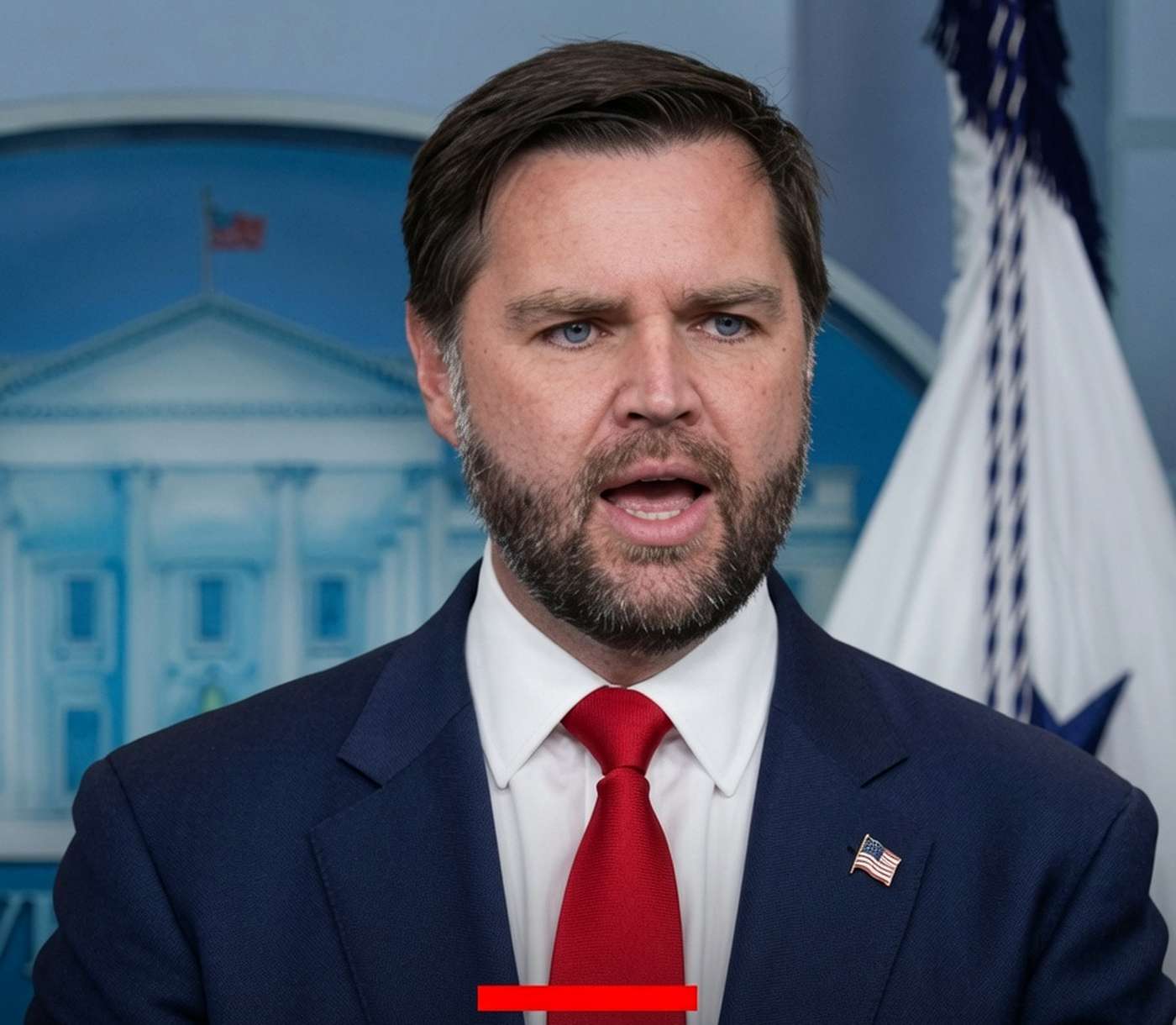
Vice President JD Vance provided another big update on Thursday surrounding the recently signed deal with Iran.
During a White House press briefing, the vice president fielded several questions from reporters after President Donald Trump signed the US-Iran Memorandum of Understanding (MOU).
Kicking off the briefing, a reporter asked Vance, “Do you think that the current Iranian leadership recognizes the leverage that the U.S. holds over itself economically and militarily enough to actually go forth with fundamentally changing their behavior over the long-term and going about things differently?”
“So, I certainly think they recognize the leverage that the United States has over them. We’ve seen that in a number of our conversations,” Vance said.
“We’ve seen that just in their behavior over the last couple of days. They certainly recognize that the United States has great leverage. Will that ultimately lead to a change in behavior? I don’t know,” Vance said.
“You know, I’ve seen skeptics of the deal. People say the Iranians will never change their behavior. Well, maybe that’s true, and if so, they don’t get any of the benefits of the bargain. But isn’t it worth trying? Isn’t it worth seeing whether this incredibly weakened position that the president of the United States has put the Iranians under, whether that motivates them to change their behavior, not just vis-a-vis the West, but vis-a-vis the Middle East?” Vance asked.
“And one of the interesting things about this is, you know, the technical details of this we can, of course, get into. There are going to be any number of opinions about the negotiation, about where it’s ultimately going to go,” Vance said.
“But I tend to think that you should trust the people who know the Iranians the best and who have the most to lose. What are the Gulf Arab states saying about this deal?” the VP remarked.
“What are they saying about this deal compared to the JCPOA in 2015? This is the Obama nuclear deal,” Vance charged.
“Well, back then, they hated that deal. They felt like it empowered the Iranians to be bad actors across the region. And, of course, that’s exactly what happened. They were right about that. What are they saying about the president’s peace deal?” the VP continued.
“They’re saying this is an amazingly transformative thing for the region, because either way, we and the broader region win. Iran is weakened, their nuclear program destroyed, their economy in desperate straits,” Vance said.
Vance concluded, “And if they change their behavior, big things are going to happen for Iran and for the world. If they don’t, no skin off our backs. Either way, we win. And that’s the way the president has set up this deal and this negotiation.
WATCH:
Vance spent much of the week pushing back against widespread reports claiming the deal contains a massive reconstruction fund worth hundreds of billions of dollars.
“We’ll be releasing the text this week,” Vance said.
“What everybody will see is that Iran doesn’t get a dime of money unless they perform their obligations.”
According to administration officials, no frozen Iranian assets have been released.
No sanctions have been lifted.
No direct payments have been authorized.
Instead, any future economic relief would be tied to strict compliance requirements involving Iran’s nuclear program.
Vance explained that Iran would need to permanently abandon efforts to obtain nuclear weapons, eliminate enriched nuclear stockpiles, and submit to extensive verification measures before meaningful sanctions relief could occur.
Officials have also indicated that Gulf nations could potentially invest in Iranian reconstruction projects in the future, but only if Tehran fully complies with the agreement.
One of the most significant outcomes of the agreement involves the Strait of Hormuz.
Administration officials say they expect the strait to fully reopen after Friday’s signing ceremony.


